(the number of current visitors is automatically updated every 4 minutes)

If you want to share information about this web page...
This page begins with a very brief overview of the historical development of hermeneutics. This is followed by epistemological reflections concerning approaches and procedures, and finally, a proposed methodology for a hermeneutic study grounded in the lifeworld paradigm.
You will understand this content best if you have first read the pages Philosophy of Science and Introduction to Qualitative Methods.
What we humans perceive as true and correct usually involves interpretations that are widely accepted within the culture and context in which we live. In research, however, this everyday interpretation is not enough. Here, systematized and validated proposals for how a research question can be answered are needed.
Interpretations occur in all research, but it is only in hermeneutic studies that interpretation is presented as a method of analysis. The researcher needs to familiarize themselves with the conditions of the interpretive work, as hermeneutics is not a fixed, ready-made method, but rather an approach that guides the practical procedures of an empirical study. Consequently, the results of a hermeneutic analysis are often described in the form of a proposal for a new understanding. For higher truth claims, further research using a different method is required, such as a questionnaire with randomly selected participants.
Short history
In Greek mythology, the god Hermes was a messenger who delivered and interpreted the messages of the other gods to the people. It was not until the 17th century that the word hermeneutics came into wider use, though for a long time this occurred without any demands for assessing the validity of interpretations.
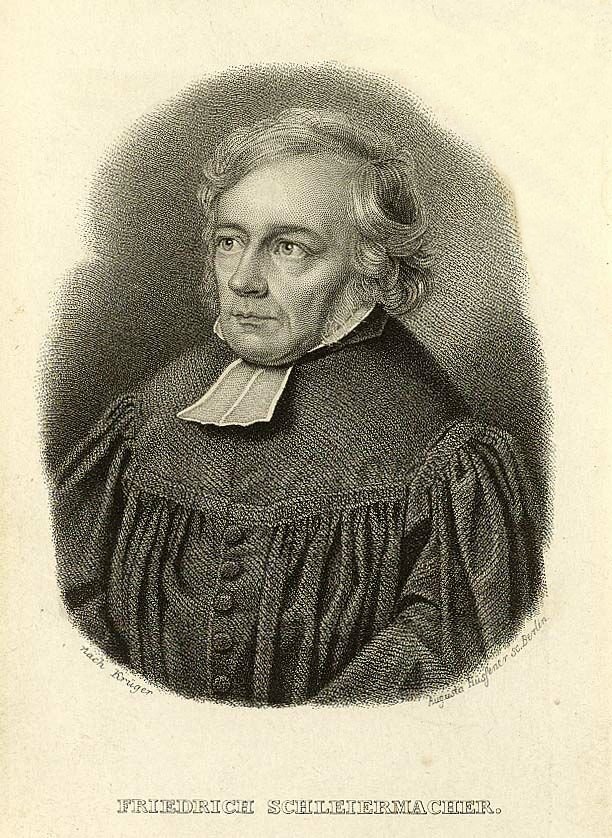
In the early 19th century, in the shadow of technological development and emerging industrialization, natural science ideals began to develop. Soon, this view of science also came to apply to the social sciences and humanities under the name of positivism. Perhaps the German theologian Friedrich Schleiermacher (1996/1799) was inspired by these same ideals when he attempted to create a concrete method for interpreting secular texts. He proceeded from the premise that a correct interpretation requires knowledge of the context in which a text originated. Only when the context is known is it time for the next step: to empathize with and try to understand what the author intended to say with their text.
In the early 19th century, in the shadow of technological development and emerging industrialization, natural science ideals began to develop. Soon, this view of science also came to apply to the social sciences and humanities under the name of positivism. Perhaps the German theologian Friedrich Schleiermacher (1996/1799) was inspired by these same ideals when he attempted to create a concrete method for interpreting secular texts. He proceeded from the premise that a correct interpretation requires knowledge of the context in which a text originated. Only when the context is known is it time for the next step: to empathize with and try to understand what the author intended to say with their text.
Just over half a century later, Wilhelm Dilthey (1989/1883) and several other hermeneutically minded thinkers continued the work of trying to make hermeneutics accepted within the research community. Dilthey, however, questioned natural science ideals for the interpretation of texts. Instead, he argued for a fundamental difference between the natural sciences and the humanities. With such a distinction, interpretations within different scientific contexts will rest on completely different epistemological foundations.
According to Köster (1977), he did, however, sense that the interpretive process was more complicated than that, but it was Martin Heidegger (1998/1927) who, a few decades later, pointed out that Schleiermacher’s and Dilthey’s method-oriented hermeneutics was not at all as unproblematic as it appeared to be. The talk of true interpretations misses the essential aspect of a reader’s assessment of the meaningfulness of an interpretation.
About a hundred years ago, Heidegger directed his hermeneutic interest toward human processes of understanding, and now existential philosophers took the baton. The path went via Edmund Husserl’s phenomenology to the phenomenologically influenced hermeneutics that began to be applied across several social science and humanities research areas during the second half of the 20th century.
Hermeneutic Epistemology
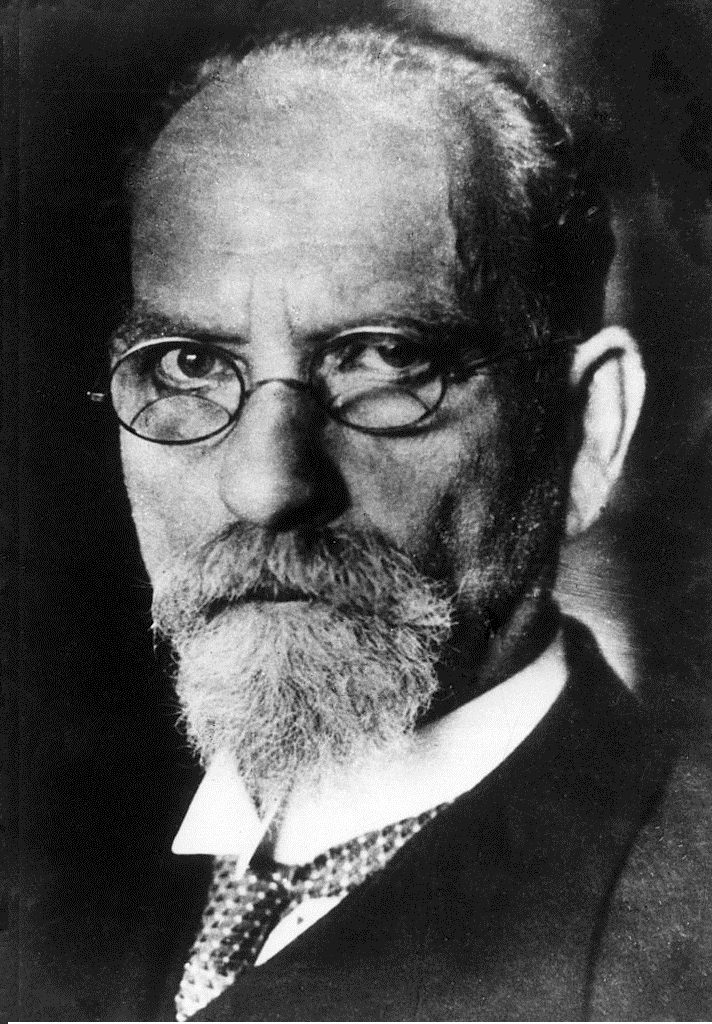
Hermeneutics as an epistemology has its origins in the phenomenological theory of the lifeworld introduced by Edmund Husserl at the turn of the last century (Husserl, 1995/1907). Husserl wanted to solve the problem that ordinary people rarely recognized themselves in the socially oriented research based on positivism and measurable observations. He wanted to lay a foundation of solid concepts for scientific studies of people’s life situations and the ordinary existence in which our lives unfold. With the concept of the “natural attitude,” he described the relationship between the factual, the objective, and the experienced, the subjective. We humans, after all, attribute meaning to all occurrences we encounter in our waking life, and it is precisely this meaning that, in a phenomenological analysis, transforms an everyday occurrence into a meaning-bearing phenomenon. Phenomenology means the study of phenomena as they are experienced by human subjects.
To understand the meaning and significance that another person attributes to a phenomenon requires a lifeworld perspective. The lifeworld is individual and can never be shared, but with open questions, where the person asking is genuinely interested in the answer, it is possible to get a picture of what a phenomenon means in the other person’s lifeworld. With such a starting point, Martin Heidegger was able to see something more than the methodology that had been Schleiermacher’s and Dilthey’s project. He directed his interest toward human understanding as an existential phenomenon and discovered a hitherto overlooked element within the interpretive process itself.
Interpretation as ontology
In his ontological analysis of being, Heidegger discovered that human processes of understanding appeared to be influenced by an underlying understanding. When we believe we have understood something new, this stems to some extent from ourselves.
The consequence of this insight was a kind of shock, Köster (1977) claims, and the hermeneuticists who wanted to create secure methods for true interpretations felt strongly challenged. Did the saying that “everything is relative” really contain a grain of truth? Martin Heidegger was confronted with this question, Köster argues, and he had himself contributed to raising it. Heidegger pointed to an obvious danger while simultaneously contributing to new knowledge about human processes of understanding. People must, in fact, have a pre-understanding in order to even be able to formulate a question at all.
In Heidegger’s phenomenological analysis, the human capacity for interpretation is developed into an ontology, where a fundamental process of understanding is an integral part of our entire being. Humans are quite simply interpreting beings. The ability to interpret and understand is fundamental to human existence as a human being.
Already at birth, we are thrown into a tradition, and we strive more or less consciously to adapt to it. We can, for example, choose to be ourselves and realize our possibilities of existence. We do not know how much time we have to do this, so it is a matter of seizing every opportunity for self-realization—an authentic life, according to Heidegger. Part of this life is, of course, also the fact that our time will run out. Therefore, it is important that we realize our possibilities of existence while we are still alive and can still choose.
Our conditions of life naturally also include the possibility of choosing an inauthentic life, where we rather uncritically adapt to the everyday world, without considering what other possibilities are available. According to Heidegger, we then become like bark boats carried along in a stream of water. We bump into stones and edges, and float along without exerting any influence or taking responsibility ourselves. As bark boats, we have transitioned from a true being to become something Heidegger calls “das man”. “What has happened then is not that the human being takes over a tradition, but that the tradition takes over them. They are drawn into the stream of tradition and allow themselves to be driven here and there” (Benktsson, 1985).
Interpretation as epistemology
The most important leading figure in hermeneutics, however, is not Heidegger but his closest student, Hans-Georg Gadamer. In polemic with the method-oriented hermeneutics of the 19th century (Schleiermacher and Dilthey), and perhaps above all with positivism, he questions the possibility of an objective truth.
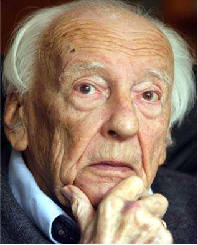
Gadamer argues that instead of speaking of truth, we should realize that phenomena viewed from a lifeworld perspective can be understood in several different ways. They have a scope of meaning and multiple horizons of meaning. Thus, truth exists only in the plural when it comes to the meaning of lived phenomena.
How, then, can we understand other people’s lifeworlds, and why do we understand things the way we do? Gadamer (1997/1960) addresses such questions using several core concepts that all relate to the issue of how we humans understand ourselves and the nature of reality.
The search for a research method that yields a secure, true, and correct result independent of its context is, according to Gadamer, doomed to fail. However, if we are aware of the significance of context and tradition, we can avoid certain pitfalls. By reflecting on why certain research questions are posed, how they are posed, and which method is chosen to answer a research question, the power of culture and tradition can be diminished in favor of an open hermeneutic approach.
There are, however, several factors that limit the possibility of total openness. That which does not fit within our horizons of understanding is often perceived as meaningless. A good dialogue can, however, create opportunities for encounters between horizons of understanding, and if the parties can leave their original positions, it may be possible to gradually adjust their horizons of understanding to achieve a new understanding that is more developed than the original. Gadamer calls this a “fusion of horizons”.
The question of openness to new horizons of understanding is closely intertwined with the concept of pre-judgment (prejudice), where Gadamer further develops Heidegger’s analysis of the pre-structures of understanding. We humans are, after all, not blank slates; on the contrary, our understanding always proceeds from something we have already understood.
The concept of pre-understanding describes a fundamental prerequisite for human understanding. As we already saw with Heidegger, this means that our attention is always selective when we are faced with a new phenomenon. We actually have several pre-understandings, in the form of different thoughts and feelings that are activated when encountering new meaningful content. The consequence is that we cannot really know anything other than what we understand using our pre-understanding as a starting point.
Behind our pre-understanding lies our effective history (Wirkungsgeschichte). With this concept, Gadamer describes the power that tradition has over us. The influence of tradition is so strong that we are affected by it even when we reject it, or perhaps especially then. The rather common phenomenon that we, during a certain period in life, may revolt against the values of our parents’ generation, only to find a few years later that we have always been more like our parents than we initially thought (or wanted to be), can illustrate this.
Interpretation as explanation
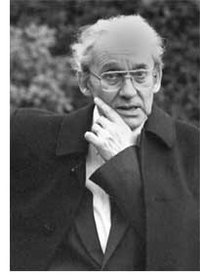
Among hermeneutic theorists, Paul Ricoeur should also be mentioned. Ricoeur (1976), a well-known French figure in the field, argues against Gadamer and asserts that an open approach is insufficient for optimal understanding. Like Gadamer, he was influenced by phenomenology and lifeworld theory. However, he came to take hermeneutics in a somewhat different direction in his search for solutions to the interpretive problems within the social sciences and humanities.
As a rule, we must also explain a text, statement, or action, and search for hidden meanings in order to understand more than what is obvious, Ricoeur argues. Whereas Gadamer questions “ready-made” scientific methods, Ricoeur believes that explanation and understanding should be united in a critical hermeneutics.
Ricoeur’s hermeneutic philosophy has often served as a guiding principle in studies where an open approach is not enough to discover concealed meanings. Somewhat simplified, one could say that while Gadamer emphasizes the importance of being vigilant about oneself and one’s own pre-understanding, Ricoeur highlights the productivity of focusing attention on the hidden meanings that might possibly exist within a phenomenon. Here, the goal is to eliminate the risk of the interpretive work getting stuck in a closed hermeneutic circle, and to view explanations as an important part of an interpretive analysis. For Ricoeur (1965), psychoanalytic dream interpretation constitutes an interesting model for how explanatory interpretive work can be carried out (Cf. Nyström p. 261, in Selander & Ödman, 2005).
Empirical hermeneutics grounded in the lifeworld
The brief review of hermeneutic epistemology has now hopefully provided a picture of humans as interpreting beings during all the waking hours of life. In empirical studies with a hermeneutic approach, this everyday interpretation needs to be systematized and controlled so that it becomes possible to argue for new and fruitful ways of understanding the research problem that prompted a scientific study. In qualitative studies using other research approaches, such as ethnography, grounded theory, content analysis, etc., it is often quite easy to discover interpretations within the analytical work. However, the validity of the interpretation is rarely problematized in those contexts.
Using the epistemology of how human understanding functions as an act of consciousness, we can conclude that we can never observe our horizons of understanding from the outside. Föllesdal, Wallöe, and Elster (1993) compare this to a spider’s web. If the spider lives its entire life inside the web, it cannot survey the web from the outside. It can only get to know the web by pulling on different threads and forming a picture of its various parts. Our horizon of understanding is exactly like a spider’s web. We always find ourselves inside the web and cannot see it from the outside; we can only explore it partially from the point where we are located.
A hermeneutically oriented researcher grounded in the lifeworld should not, however, stop at this insight. In empirical research, it is necessary to try to overcome all the difficulties inherent in attempting to understand another person’s lifeworld. If we were never to challenge the difficulties of getting out of our own spider’s web, such studies would essentially be meaningless.
Distinguishing between everyday hermeneutics and lifeworld hermeneutics
In a complex and multifaceted society, we need the ability to understand what is happening around us, even that which is not immediately easy to grasp. Only when we have made ourselves aware of the meaning that actions and statements have for us can we decide what to say or do, just as when we receive an answer to a question and consider whether to accept the answer or not (Hellesnes, 1989). But if a researcher perceives their everyday hermeneutic ability as sufficient for methodological interpretive work, problems arise. Therefore, there is reason to object to empirical studies where pre-understanding is unreflectively used as the basis for scientific interpretive work. A conflation of everyday hermeneutics and interpretations suitable for scientific work can, for example, be sensed in method descriptions where the researcher presents their own pre-understanding, such as their professional experience, as something that can be consciously controlled and used.
As already mentioned, there are varying ways of looking at hermeneutics as a research method. Different questions can be asked of the data, and different researchers can find completely different answers. According to Gadamer, we should not place too much trust in scientific methods either. But, and this deserves to be emphasized, he does not thereby claim that a scientific study should rest on an everyday hermeneutic approach. In Truth and Method (Gadamer, 1997/1960), he challenges empirically oriented researchers to take on the difficult question of how research methods can be developed to see something other than pre-understanding in an object of interpretation.
Many hermeneuticists refer to Ricoeur’s thinking to formulate their theoretical starting points. Boel Englund (p. 119 in Selander & Ödman, 2005) suggests that Ricoeur in particular, more than other hermeneutically minded philosophers, invites being featured under the heading “theoretical framework” in academic essays and dissertations. In Ricoeur, there is a striving to bring hermeneutics to a more scientifically useful level than what we have seen in Gadamer. At the same time, the existential philosophical thinking is included, and this is precisely what is characteristic of Ricoeur’s writing: a both-and approach. Englund believes that it is Ricoeur’s way of breaking with positivist ideals, while simultaneously reaching out toward an approach that requires distance to what is being studied, that makes it feel safe to refer to him.
As mentioned above, Ricoeur introduces explanations as an important part of the interpretive work. His interest in reading between the lines leads many researchers to speak of him as the hermeneuticist of critical reflection. The somewhat paradoxical aspect, however, is that if one only uses Ricoeur as a source of inspiration, one can lose the critical approach to oneself and one’s own pre-understanding.
Becoming aware of how one’s own background affects the emerging understanding is aided by confrontations with other horizons of meaning (for example, with other research). It is precisely when we understand something new that we can understand what is different compared to what we understood previously. But Gadamer argues that this is rarely enough to abandon the everyday hermeneutic approach. In the essay collection Praise of Theory (Gadamer, 1998), he suggests that theoretical support in an interpretive work can be a source of inspiration that makes it possible to see something in a new, or in a different way, than what one’s own pre-understanding offers.
When choosing theoretical support for an interpretation, however, it is advisable to consider what the Italian philosopher Gianni Vattimo (1997) describes as “weak thought” (il pensiero debole). Weak thought implies a hermeneutic thinking—a thinking that strives to constantly relate its interpretations to the interpretations of others. The opposite of weak thought, strong thought, on the other hand, claims to possess the Truth with a capital T, which is often the case with theories that have traits of dogmatism.
A hermeneutic approach is a self-critical and reflective approach
What, then, is the consequence of presenting oneself and one’s professional activity as a form of pre-understanding? Such a presentation rarely provides sufficient information about how the researcher has reflected on their own approach. It perhaps only makes it easier for a reader to uncover prejudices that the researcher themselves is unaware of.
When several sub-studies are included in a slightly larger project, it is important to consider whether each sub-study should rest on its own premises, or if the understanding developed from the initial studies should be allowed to guide the subsequent ones. In the latter case, the plan might be to form a knowledge spiral, where new knowledge forms new understanding at the same time as each new step builds upon already acquired knowledge. In a project with multiple sub-studies, such as a compilation thesis, the researcher should decide whether the knowledge first acquired in one sub-study should be incorporated into the research question for the next sub-study. Or should the results from the first sub-study, and so on, be bracketed to the greatest extent possible when designing the next sub-study? Here, of course, there are no obvious rights or wrongs, but it is important to reflect on the consequences of different choices.
How does one proceed, then, when control over pre-understanding can neither be reduced to personal reflections nor a simple presentation of professional background? Presumably, control should occur in several steps. The first and simplest step could, for example, involve self-critical reflections. In the next step, the researcher can investigate what happens when their pre-understanding is confronted with data. And here it can actually be worthwhile to unleash one’s most prejudiced thoughts, precisely in order to become aware of them.
For anyone reviewing a hermeneutic study, a similar process applies. If the various interpretive steps are visible in the presentation of results, a critical reader can assess whether the research provides a new and fruitful insight or not. If this is not the case, there is reason to consider whether the researcher’s pre-understanding has been allowed to entirely dictate the interpretive work. Or is it that one’s own reading is influenced by prejudice?
Finally, there is an issue of collective pre-understanding to address. Many empirical studies are, after all, conducted within the framework of an academic discipline. How, then, should this discipline be handled, and what concepts should be used? Here, there is reason to reflect on linguistic formulations. Occasionally, concepts are used that have been employed so often, and over time increasingly unreflectively, that they have turned into platitudes. What does it actually mean to be “seen and confirmed”? Is there any concrete meaning to “listening”? If this cannot be clarified and exemplified, the use of clichéd concepts may say more about the researcher themselves than about the phenomenon being studied. Is it possibly a matter of anxiety about the risk of challenging the prevailing paradigm, or is it merely an inability to express oneself concretely? Perhaps it is the case that the study deals with such universally human phenomena that similar results can be found in many other studies as well. Has, for example, the importance of “listening, seeing, and understanding” become something that is more or less unreflectively part of a professional collective pre-understanding? If so, the researcher’s selective attention may have spontaneously highlighted precisely these meanings in the data, while any contradictions remain invisible.
Interpreting
Can one learn to interpret scientifically, and is it possible to formulate correct interpretations? As should probably already be clear, both questions must be answered with a no. Interpreting is essentially about making educated guesses that are tested against data. And it is only this careful testing that one can learn during a methodology course. The starting point of the guess must always be found in the data, but a lack of sensitivity to hidden meanings can hinder creative interpretive work. For the hermeneutically oriented researcher, the challenge consists of developing both imagination and the ability to abstract patterns and structures so that preliminary interpretations can be formulated and tested.
The scientific element therefore consists of checking preliminary interpretations against validity criteria. The interpretations are evaluated against both the research question and the content of the data, as well as against the tricks that pre-understanding might play. A critical approach to one’s own interpretive work is about filtering out speculative, unreasonable, meaningless, or simply bad interpretive proposals. If the researcher dares to trust their ability to apply validity criteria, it will probably be easier to formulate interesting and relevant interpretive proposals.
A simplified and illustrative example of creative interpretive work can be found in a rather familiar interpretive situation: the classic detective story. The queen of the genre, Agatha Christie, lets Hercule Poirot build a system of interpretations that he, in various steps, tests against available information (cf. data in a study). And being the skilled detective he is, Poirot investigates whether what appears to be completely obvious actually means something entirely different.
Drawing inspiration from Gadamer, we can see how Poirot looks for that which runs counter to what he already thinks he knows. With elegance and ingenuity, he applies an open approach, and does not let general preconceptions about the people involved influence the picture. Instead, he actively sets out to see something else—that which no one else really wants to see.
It might seem a bit disrespectful to compare a scientific interpretive analysis to a detective story, but it is precisely the desire to find more or less hidden meanings in the data that drives hermeneutically oriented researchers to many hours of analytical work. And the dramatic events in a detective story make it possible to play with the idea, and consider how bold one can be when formulating preliminary interpretive proposals.
A continued comparison between Hercule Poirot and a researching hermeneuticist reveals more points of contact. Namely, Poirot seems to combine Gadamerian openness with something Ricoeur calls the “hermeneutics of suspicion”. As we have seen earlier, Ricoeur advocates a critical interpretation that makes it possible to see new meanings in distorted and masked expressions of meaning. The act of interpretation here involves a combination of open listening and critical suspicion. There are no real limits to how far a suspicion can be taken when the researcher formulates their first preliminary interpretive proposals. The limits come in the next phase, when the viability of the preliminary interpretations is to be tested.
Testing the validity of interpretations
In the early 1970s, the question of validity in interpretive studies was brought to the forefront by a group of researchers at Stockholm University. Under the leadership of Arne Trankell, knowledge from the psychology of testimony came to form the basis for the validity criteria that were first formulated. Trankell had already developed a method in the 1960s for analyzing statements within the Swedish legal system, where legal testimonies were assessed in relation to their specific context (Trankell, 1963; Gustavsson & Holgersson, 1994).
In Trankell’s method, possible mechanisms behind the origin of a witness statement were tested against relevant background data. This required a richly nuanced analysis of how people in such situations typically think, feel, and act, as well as the interaction between key individuals connected to the situation in which the statement arose. When the same principles were applied in a research project (Trankell, 1973), he found that it is possible to establish rules for testing an interpretation. An interpretation that withstands testing must first and foremost explain what the essential data means. Furthermore, the researcher should be able to specify the context of which the data forms various parts, and indicate the circumstances that gave rise to them. The second requirement dictates that an interpretive proposal that holds up to validity testing should be the only one capable of explaining the available information. There should be no alternative ways that can equally well, or perhaps even better, illuminate the meaning in the data.
If we test interpretations in this way, however, we touch upon an area not usually associated with qualitative methods, namely a hypothetico-deductive approach, something that typically characterizes positivism and the natural sciences. Yet it is actually possible to discern several similarities between the two paradigms, argue Föllesdal et al. (1993), who thereby challenge the notion that hermeneutics and the hypothetico-deductive method stand in direct opposition to each other. Föllesdal et al. believe that the only difference between the natural scientist and the hermeneuticist is that the former works with causal hypotheses and measurable variables, while the latter uses the hypothetico-deductive method on meaningful material, i.e., interviews, texts, images, etc.
Once the researcher has formulated an interpretation that both answers the research question and corresponds well with the meaning in the data, and furthermore does so in a better and more meaningful way than all other tentative attempts at interpretation, it becomes possible to present a new understanding (or something already known in a better way than before). But if the researcher discovers something that does not align with the preliminary interpretation, it is important to reflect on other possible ways of understanding. The situation is, of course, parallel to that where the natural scientist is faced with a natural phenomenon that is difficult to grasp, argue Föllesdal et al. The researcher uses both knowledge and personal creativity here to formulate a hypothesis that makes the new element consistent with the rest of our perception of reality.
Once the question of the validity of interpretations was introduced in the social sciences, interest was directed toward the possibilities of hermeneutics as a research method. Interpretation of empirical material often means that several different interpretive possibilities can become relevant for the same data (Gustavsson, 1996). Here, it is naturally crucial to sort out the most meaningful among them. Sometimes more information is needed to assess which of several different alternatives bestows the most meaning upon the phenomenon being studied. Sometimes it may become necessary to return to the research field for further data collection. When a main interpretation is finally formulated, it should be alone in having support in all essential parts of the data.
Another validity requirement, highlighted by Gustavsson, is to investigate whether there is data that contradicts a preliminary interpretation. The idea has certain similarities with the philosopher of science Karl Popper’s thoughts that scientific knowledge grows by the researcher attempting to falsify their own interpretive hypotheses. The key is to first formulate bold guesses, Popper argues, and then subject them to as much criticism as possible. The assumptions that survive all attempts at falsification are often interesting to work further with. Popper’s reasoning can provide an indication of how a researcher can proceed to reject interpretations based on faulty or insufficient premises, Gustavsson argues.
Discussions about validity criteria also fall back on the problem of pre-understanding, which can put the researcher in a dilemma. An anxiety that the analytical work will be governed by pre-understanding can sometimes lead to such great caution that it jeopardizes analytical ability. It then becomes difficult to discover hidden meanings and patterns in the data. To prevent the study’s results from being reduced to something that mostly resembles a mere summary of the data, the researcher needs to balance the risk of pre-understanding gaining an uncontrolled influence against an excessive caution that inhibits analytical ability.
An example of a study where the researcher succeeds in taking a critical approach to themselves and their own pre-understanding, without this negatively affecting their ability to construct meaningful interpretations, is Anders Gustavsson’s study on what it means to be a neighbor to people with intellectual disabilities. Gustavsson (1990) studied protest actions when people with intellectual disabilities were to be integrated into a “regular” residential neighborhood in the late 1980s. Among the thirty families in the area, ten were highly critical of the planned group home. Gustavsson’s interpretive work proceeded from personal-historical reconstructions that directed interest toward the background of individual reactions. During the analytical work, the traces that provided information about the neighbors’ ways of reacting, and the underlying experiences of the people involved, were systematized. Gustavsson assumed that there is a connection between a person’s existential reality and their actions and statements. The reader is given insight into how quality criteria were used, which creates good opportunities to assess the validity of the interpretations.
Proposed workflow in a hermeneutic study grounded in the lifeworld
Based on epistemology, it is possible to formulate proposals for concrete procedures in lifeworld hermeneutic studies. The proposal that follows is based on the existential hermeneutics advocated by, among others, Trankell (1993), Ödman (1994; 1995a; 1995b; 2004), and Gustavsson (1990; 1996). In this proposal, the epistemological foundation has also been clarified in the way Nyström suggests with the term lifeworld hermeneutics (see, e.g., Nyström, 2012).
Step 1 – Formulate a purpose and define a phenomenon
An occurrence studied with a lifeworld approach is to be regarded as a phenomenon in the phenomenological sense, i.e., as it is experienced by the participants in the study. A hermeneutic study also proceeds from a research question intended to explain and understand something, e.g., the background to the meaning attributed to the phenomenon, why precisely this meaning arises, what conditions the meaning is based upon, or how the meaning of the phenomenon affects those involved. In connection with the problem formulation, purpose, and research question, it is important to define who the subjects (participants) in the study are so that the study’s perspective becomes clear. Often, the context in which the study is conducted is also significant for both data collection and analysis.
Step 2 – Problematize the impact of pre-understanding on the interpretive work
When we are confronted with new phenomena that require active reflection in order for us to understand them, we rarely think of pre-understanding precisely as pre-understanding. We prefer to speak of professionalism or wisdom. Regardless of what we call it, it is nonetheless important throughout the entire research process to continuously problematize the part of pre-understanding that risks governing the research in an uncontrolled manner.
Step 3 – Collect the information that will form the basis for the interpretive work
Data in lifeworld hermeneutic studies can vary quite a bit, sharing the common feature that they can be written down as text in the form of transcribed interviews, field notes, diary entries, or the like. Data collection is conducted with an open approach, using open-ended questions that stimulate participants to reflect on the phenomenon in question. Answers to leading questions or field notes based on the researcher’s own unreflected prejudices make it difficult to discover anything other than one’s own pre-understanding during the analytical work. Also, keep in mind that the selection of people and situations should vary optimally, so that the various aspects of the phenomenon are illuminated from multiple perspectives in the data.
Step 4 – Form your own picture of the initial whole
The analytical work begins with several readings of the collected and transcribed information that will constitute the study’s data. This dataset constitutes the initial whole, and the researcher needs to form a comprehensive picture of it. This first familiarization phase lies close to the natural attitude with its unreflected pre-understanding, so the researcher should strive for an “active openness,” for example, by continuously reflecting on everything that might possibly influence their own reading of the text.
Step 5 – Interpret different aspects of relevant data
It is advisable to begin the analytical work by describing the data that directly or indirectly relates to the phenomenon being studied at a more abstract level than in the original text. In this way, it is easier to see which parts of the material have a similar meaning, and which can form the basis for a partial interpretation. Then the actual interpretive work begins. Formulating a first preliminary interpretation is a well-founded guess that is successively tested against the data, and which during that process is revised and further developed. It is only a careful testing, together with a successive refining of the emerging interpretation, that can be established as a methodological principle. The foundation for the guess must certainly be found in the data, but a lack of sensitivity to latent meanings, a strong desire to follow rules, along with overly concrete thinking, rarely stimulates creative interpretive work. For the researcher, the challenge consists of developing the ability to see even that which is not fully visible.
Examples of initial interpretive acts
One way to begin interpretive work is to formulate a relatively loosely grounded interpretive idea that can then be checked against the data. Because the idea is preliminary, there are often contradictions in the material that make it necessary to develop the interpretation further. The original interpretive idea and the contradiction may, for example, constitute two sides of something that has been illuminated from two different angles during data collection.
Another way to get started is to notice an interesting meaning in one part of the data, such as in one of the interviews, and then begin looking for similar meanings, which perhaps lie at a higher level of abstraction, in another part of the data. Not infrequently, one then discovers that the same underlying meanings are present in multiple places, even though the concrete content varies. Discovering common denominators in what at first glance appears to differ naturally requires active interpretation.
A third example of an interpretive act is called the good-reason-essay (cf. Lesche, 1971). Here, the researcher assumes that there are motives behind what people say or do. The interpretation is directed toward understanding the motives and their underlying causes, the good reason. If the picture of the preconditions for statements and actions becomes clearer, the possibility increases of, for example, understanding the rational within the seemingly irrational.
Interpreting is explaining
After this initial interpretive act, it is often possible to progress by viewing an interpretive proposal as a preliminary explanation. In an explanatory interpretation, a proposal is formulated for how the studied phenomenon can be understood in a different and better way than in the original overall understanding (i.e., in the familiarization phase). If one examines the most meaningful interpretations in hermeneutic studies, one often finds that they contain interesting proposals for explanations of how different phenomena are connected. Several different forms of explanations may be applicable, such as one of the following:
Explanation in relation to tradition
Here, it is a matter of reasoning about the plausibility of an interpretation based on what is understood as true and correct within the current context. An example of such reasoning regarding plausibility can be found in a study of the existential conditions of middle age (Ödman, 1994). One of the informants in the study related that as a child, he “only benefited from receiving corporal punishment.” Since the majority of the Western world subscribes to the idea that there is nothing positive about the corporal punishment of children, Ödman refrains from investigating what might possibly have been good about corporal punishment for this particular informant. Instead, he directs his interpretation toward an attempt to explain why this man believes this to be the case for him.
Explanation using theoretical constructs or previous research
An explanatory interpretation can sometimes draw inspiration from theories or other research, but a certain degree of caution is recommended here. Strong theoretical constructs (Cf. Vattimo, 1997) or predictive theories (with cause-and-effect explanations) rarely contribute to an increased understanding of meaningful material. General conceptual constructs (e.g., existential philosophy), which lack direct and clear relevance to the study, do not always create increased understanding when used to support an explicit existential interpretation. Therefore, it is important to bear in mind that it is the meaning within the data, not theoretical constructs, that should form the basis for a research result. Interpretations that align too perfectly with a theory should also arouse the researcher’s suspicion.
Step 6 – Continuously test the viability of preliminary interpretations against data
An interpretation should bestow meaning upon the phenomenon being studied. It should reflect neither the researcher’s pre-understanding, a theory used as interpretive support, nor the academic discipline within which the study is conducted. Here are a few suggestions for how the testing of preliminary interpretations can be carried out:
- Once a preliminary interpretation has been formulated, the researcher should investigate whether it alone explains the available information regarding the phenomenon in question, or if there are other ways to understand the same information (Cf. Trankell, 1973). If there are several competing interpretive possibilities, more data may sometimes be required to single out the most meaningful interpretation.
- With reference to Karl Popper, Gustavsson (1990; 1996), for example, shows how a researcher can attempt to invalidate, or falsify, their interpretations. It is relatively easy to check whether a preliminary interpretation is contradicted by a passage in the data. This is especially important when the researcher has two interpretive ideas and is trying to single out the most reasonable and meaningful of them.
- With reference to Gadamer, Ödman (1995) suggests that the researcher can “unleash” their feelings toward the object of interpretation, in order to bring pre-understanding onto the playing field so that it can be examined. This makes it easier to control the impact of pre-understanding on an interpretive idea. It then becomes easier to discover the “otherness” (Cf. Gadamer, 1997/1960) in the data.
- A preliminary interpretation can also advantageously be reviewed by other people tasked with identifying the effects of the researcher’s pre-understanding. It is, of course, an advantage if these “reviewers” are familiar with the researcher’s pet theories or biases. (However, relying solely on intersubjective checks can naturally involve risks, especially if the group discussing interpretive ideas shares the same prejudices.)
- The researcher should independently look for counterarguments and try to discover gaps in their own argumentation for an interpretive idea. Here, it is often fruitful to also review what other researchers have concluded.
- The risk of trivial interpretations should also be factored into a validity check aimed at filtering out normative interpretations.
Step 7 – Build a structure of interpretations
The interpretations that withstand validity testing are presented in a structure that covers the entire dataset upon which the study rests. Only when all data that directly or indirectly answers the research question are covered by sub-interpretations is it time to begin comparing them. The comparative analysis should lead to a main interpretation, but first, here are some examples of structures for presenting sub-interpretations. Each example is presented alongside references to studies where the respective structure is applied:
- In an open structure, it is relatively easy to follow how each sub-interpretation provides a proposal for explanation and understanding regarding a distinct aspect of the research question. The sub-interpretations that withstand testing are brought into a comparative analysis that investigates how these aspects relate to each other and form a new whole (a main interpretation). (See, e.g., Hammarlund, Lundgren & Nyström, 2008; Nyström, 2006; 2011.)
- A dialectical structure means that each sub-interpretation is presented as thesis-antithesis-synthesis. Such a structure may, for example, be appropriate when the research question concerns the preconditions for a desirable development of some kind. The first interpretations might, for instance, deal with what facilitates (thesis) and what hinders (antithesis) this. After testing against validity criteria, a synthesis is created that deals with, for example, how the good can be achieved by managing the undesirable in a certain way. The comparative analysis applies to the syntheses, each of which answers an aspect of the research question. (See, e.g., Carlsson, Hantilsson & Nyström, 2013; Palmér, Carlsson, Brunt & Nyström, 2014; Karlsson, Rydström, Nyström, Dalheim-Englund & Enskär, 2016.)
- In a case description, data from a single informant is interpreted in a single case study. This could involve, for example, a particularly interesting case narrative with several complicated aspects that require in-depth interpretations to become meaningful. The different aspects form sub-interpretations, which are compared, explained, and deepened prior to the creation of a main interpretation. (See, e.g., Nyström, 2005; Palmér, Carlsson, Brunt & Nyström, 2014.)
- A structure with multiple case descriptions means that each informant’s account of the researched phenomenon is interpreted and tested separately. The interpretations of these individual experiences are then brought into a comparative analysis. (See, e.g., Gustavsson, 1990; Ödman, 1994; Nyström, 2003a; Björk-Brämberg & Nyström, 2010.)
- A structure featuring a hermeneutic spiral means that one interpretation builds upon another. The second turn of the spiral encompasses the first interpretation while simultaneously, by successively leaving the concrete level, covering a larger part of reality. The subsequent interpretation encompasses the first two turns in the hermeneutic spiral, and so on (Ödman, 1994).
Step 8 – Compare the sub-interpretations and create a main interpretation
A hermeneutic study should conclude with a main interpretation, so that the hermeneutic circle can be completed. The methodological description should make it clear how the initial whole (the data) has been interpreted as different aspects of the phenomenon in question (sub-interpretations) and how a new whole (the main interpretation) has emerged. (The study should therefore not end with categories that merely reflect different aspects of how a phenomenon can be explained and understood.)
The creation of a main interpretation can begin with a comparative analysis where the researcher investigates how the different sub-interpretations relate to and fit together with one another. At this stage (perhaps even earlier), it often becomes apparent that one of the sub-interpretations provides a more comprehensive answer to the research question than the others. In successful cases, it can also contribute to an increased understanding of all the sub-interpretations. If so, this sub-interpretation can be further developed into a main interpretation. In other cases, further interpretive work is required for the comparative analysis to result in an overarching understanding.
The main interpretation is characterized by the fact that it explains in a stringent and logical way how the sub-interpretations are connected by a common denominator that lies at a more abstract level than the sub-interpretations themselves. Furthermore, it must not be contradicted by any of the data that directly or indirectly relates to the phenomenon. Finally, it should be tested against the most fundamental validity criterion: the criterion of the hermeneutic circle (Ödman, 2005). The parts and the whole in the finished puzzle of interpretations must fit together. Here, the researcher needs to think logically and contextually, while maintaining openness.
“Is there a logical connection between my interpretations and my data? Perhaps I then find a passage in the material that contradicts my interpretations, which therefore must be modified. Based on this oscillation between material and interpretation—which takes place within my own subjectivity and in confrontation with the texts in which human subjectivity is objectified—interpretations are rejected or accepted, eventually building up an overall interpretation, with which I can compare the various sub-interpretations and my picture of the material. Now Gadamer’s criterion applies: The harmony of all the details with the whole is the criterion for correct understanding. The reverse of the statement also applies; the whole must harmonize with the details.” (Ödman p. 11 in Selander & Ödman, 2005)
Step 9 – Discuss the study’s implementation and results
The discussion section appropriately begins with a reflection regarding the study’s reliability and validity. Was the right form of information collected to answer the research question, and was the data collection carried out in a reliable manner, i.e., with an open approach? How was the problematic issue of pre-understanding handled, and was the testing of the interpretations sufficient to strengthen the study’s validity?
Subsequently, it is appropriate to discuss the study’s results in relation to other research relevant to one’s own study. Since qualitative studies are not about verifying or falsifying other results, the task here is to discuss what unites or separates different studies within the same area. Against this background, it may be appropriate, for example, to reflect on possible explanations for any discrepancies, or to question established truths that might be applied in an unreflective manner. Here, it may also be fitting to reference theories that add an interesting further development to the study’s results. If the study is part of a doctoral dissertation, it may additionally be appropriate to relate the study to the academic discipline in which the dissertation is being presented.
As in most empirical studies, generalizability should also be discussed. The claims to generalizability of quantitative methods rest on random sampling. For lifeworld hermeneutic studies, the rule is instead to seek a varied sample (within the framework of the study’s perspective), so that many aspects of the phenomenon in question are included in the data forming the basis for the results. If the researcher can argue that essential variations of the phenomenon have been included in the analysis, the area of application can become significantly broader than if the study had been conducted with a narrow or random sample.
Reviewing Lifeworld Hermeneutic Studies
A well-conducted lifeworld hermeneutic study makes it possible to create understanding-based knowledge about human thoughts, feelings, and actions that often take place within the framework of complex interpersonal interactions. Such insights can, in turn, form the basis for improvements within various forms of human activity, such as education, healthcare, social work, and more. Before the results of a lifeworld hermeneutic study lead to resource-intensive changes within a practice, however, it is important that the reader also assesses how valid the new understanding is in relation to the area of application.
The researcher should therefore facilitate a critical review of the methodology used in the study. The language in a hermeneutic study should be simple and easy to comprehend. Keep in mind that hermeneutics is about understanding something that is not always easy to comprehend, not about creating academic legitimacy by using sophisticated language. Unarticulated research perspectives and unclear methodological descriptions create difficulties when the quality of a study is to be assessed. The researcher should make it possible for a reader to assess the following:
Does the researcher have an approach that makes it possible to discover something new?
A reader can critically examine the researcher’s pre-understanding by, for example, asking the following critical questions:
- Is it possible to guess the researcher’s opinions in cases where the study touches upon fundamental issues?
- Is it possible to predict the results even before they are presented?
- Does the researcher show a preference for certain explanatory models, and if so, are these allowed to dominate the analytical work?
- Are theoretical interpretive frameworks introduced so early in the study that they dictate the results?
- Does the reader receive a clear picture of how the testing of the interpretations’ viability was conducted?
Has the data collection made it possible to obtain a meaningful answer to the research question?
Another critical point is the information upon which a study is based. Interviews often hold a special position in the analytical work. When interview data is quoted in its original form, it is often relatively easy to examine the connection between the data and the interpretation. Unfortunately, the picture of how the interpretive work was conducted is not as clear when it comes to various forms of observational data, as these are already sorted (in the researcher’s mind) before being written down. Extracts from field notes from participant observations should be concrete and free from interpretations.
How are the interpretations structured?
How credible are the presented interpretations? A first question might concern when and how the researcher transitioned from describing meaning to interpreting it. Many validity criteria naturally apply to both descriptive and interpretive analyses. Both should, for example, be assessed against the part-whole criterion, and in both cases, the reader should be given access to data excerpts to understand how the analytical work was conducted.
In an interpretive study, other validity criteria should also be reported. It is easiest to assess validity in a hermeneutic study when the initial whole has been divided into parts. This is where the most concrete and context-bound interpretations are found, and it is naturally these that can be most easily evaluated in relation to the quotes or field notes shared with the reader.
If theoretical support has been used during the interpretive work, this must be reported and described. Both the researcher and the reader should be aware that the theories chosen as interpretive support are more about perspectives than truths. Sometimes, a critical reading can reveal that a theory was probably not needed to develop that particular interpretation. If so, what function does the theoretical grounding serve? Is it perhaps merely about providing the article or research report with scientific legitimacy?
How are interpretations tested?
The reader should be given the opportunity to check how the testing of the interpretations’ viability was carried out. Does the researcher report how they went about singling out the interpretation that provides the best answer to the research question? However, not all existential interpretations are equally valid, and the hermeneuticist’s task involves arguing for one of several possible ways of understanding what is most meaningful.
How stable and relevant is the main interpretation?
The internal consistency of an interpretive system (the parts’ relation to the whole) should also be assessed. Do the sub-level interpretations align with the main interpretation and vice versa? In order to test the logic of the result’s structure, all parts are thus assessed against the main interpretation.
Where to read more
In this section on hermeneutics, we have briefly become acquainted with a tradition that, in various guises, has formed a part of human knowledge-seeking ever since the days of Greek antiquity. Some hermeneutic areas have been mentioned, and with these, also literature references found below in the reference list. Finally, a few additional suggestions are presented here for those who wish to read more.
Hans-Georg Gadamer’s Truth and Method, first published in 1960 (Gadamer, 1997/1960), is an important epistemological foundation for a lifeworld hermeneutic study. For the same purpose, Jan Bengtsson’s Med livsvärlden som grund [With the Lifeworld as Foundation] (Bengtsson, 1999) and Karin Dahlberg, Helena Dahlberg, and Maria Nyström’s Reflective Lifeworld Research (Dahlberg et al., 2008) are also recommended.
A more comprehensive presentation of the history of hermeneutics and its different directions is presented by Richard Palmer in Hermeneutics (Palmer, 1969). If one wishes to read a book based on Palmer’s overview and an application of existential hermeneutics, Per-Johan Ödman’s Tolkning, förståelse, vetande – hermeneutik i teori och praktik [Interpretation, Understanding, Knowing – Hermeneutics in Theory and Practice] (Ödman, 1994) is something of a classic. Here, hermeneutic epistemology is complemented by three easy-to-read examples of how an interpretive process can unfold.
A book or research report often details more of the interpretive process than a scientific article. Examples of such books are the aforementioned Arne Trankell’s Kvarteret Flisan [The Flisan Block] (Trankell, 1973) and Per-Johan Ödman’s Kontrasternas spel del I och II [The Play of Contrasts, Parts I and II], concerning the development of Swedish mentality from the Middle Ages to the present (Ödman, 1995a; 1995b). Examples of research reports are the previously mentioned Normalmiljön det är vi [The Normal Environment, That’s Us] by Anders Gustavsson (Gustavsson, 1990), as well as his analysis of the concept of “tacit knowledge” among home care assistants (Gustavsson, 1993). This chapter is included in the research report Tyst kunskap – vad är det egentligen? [Tacit Knowledge – What is it really?]. The lifeworld hermeneutic approach within caring science is relatively extensively described in Maria Nyström’s research reports Möten på en akutmottagning [Encounters in an Emergency Department] (Nyström, 2003b) and I begynnelsen var ordet – ett vårdvetenskapligt perspektiv på språk och afasi [In the Beginning Was the Word – A Caring Science Perspective on Language and Aphasia] (Nyström, 2012).
References
- Bengtsson, J. (red.) (1999). Med livsvärlden som grund. Bidrag till utvecklingen av en livsvärlds- fenomenologisk ansats i pedagogisk forskning. Lund: Studentlitteratur.
- Benktsson, B-E. (1985). Varat och Tiden – Introduktion till Martin Heideggers tänkande. Stockholm: Liber.
- Björk Brämberg, E., & Nyström, M. (2010). To be an Immigrant and a Patient in Sweden: A study with an Individualised Perspective. International Journal of Qualitative Studies on Health and Well-being, 5,(3): 10.3402/qhw.v5i3.5145
- Carlsson, G., Hantilsson, U., & Nyström, M. (2013). Reflective team – a Clinical Intervention for Care Improvement.Reflective Practice, 15, 3, p. 378-390.
- Dahlberg, K., Dahlberg, H., & Nyström, M. (2008). Reflective Lifeworld Research. Lund: Studentlitteratur.
- Dilthey, W. (1989/1883). Introduction to the human sciences. Selected works. Oxford, GB: Priceton University Press.
- Englund, B. (2004). Om hungern efter entydighet. Om Ricours både-och och samhällsvetenskapens andra. (Kapitel i: Selander, S., & Ödman, P-J. Text och Existens sid. 119) Göteborg: Daidalos
- Föllesdal, D., Wallöe, L., & Elster, J. (1993). Argumentationsteori, språk och vetenskapsfilosofi. Stockholm: Bokförlaget Thales.
- Gadamer, H-G. (1996). The enigma of health. Stanford California: Stanford University Press.
- Gadamer, H-G. (1997/1960). Truth and Method. Second revised edition. New York: The Continuum Publishing Company.
- Gadamer, H-G. (1998). Praise of theory – speeches and essays. New Haven and London: Yale University Press.
- Gustavsson, A. (1990). Normalmiljön det är vi – en studie av vad det innebär att bo granne med förståndshandikappade. Forskningsrapport 51. Stockholm: Pedagogiska institutionen, Stockholms Universitet.
- Gustavsson, A. (1993). ”Tyst Kunskap” hos vårdbiträden inom hemtjänsten – en problematisering av begreppet. Kapitel i: Tyst Kunskap –vad är det egentligen? Rapport från CKVO-seminariet kunskapsbildning i vård och omsorg.Stockholm: Vårdhögskolan och Pedagogiska Institutionen Stockholms Universitet.
- Gustavsson, A. (1996). Att förstå människor – en tillämpning av den formella datastrukturanalysen. Texter om forskningsmetod. Stockholm: Pedagogiska Institutionen, Stockholms Universitet.
- Gustavsson, A., & Holgersson, A. (1994). Aktuella vittnespsykologiska frågor – sex uppsatser från Vittnespsykologiska forskningslaboratoriet. Rapport nr. 1. Pedagogiska Institutionen, Stockholms Universitet.
- Hammarlund, K., Lundgren, I., & Nyström, M. (2008). In the Heat of the Night it is Difficult to get it Right – Teenagers’ Attitudes and Values toward Sexual Risk-taking. International Journal of Health and Well-being, 3, 103-112.
- Heidegger, M. (1998/1927). Being and Time. (J. Macquarrie & E. Robinson Trans.) Oxford: Blackwells.
- Hellesnes, J. (1989). Hermeneutik och Kultur – Filosofiska fragment. Göteborg: Daidalos.
- Husserl, E. (1995/1907). Fenomenologins idé. Göteborg: Daidalos.
- Karlsson, K., Rydström, I., Nyström, M., Enskär, K., Dahlheim-Englund, A-C. (2016). Consequences of Needlerelated Medical Procedures: A Hermeneutic Study with Young Children (3-7years). Journal of Pediatric Nursing, vol 31, Issue 2, p. 109-118.
- Köster, W. (1977). Hermeneutikens historia: Ett drama i fem akter. Göteborg: Göteborgs Universitet. Avd. för vetenskapsteori, 0346-623X; 92.
- Lesche, C. (1971) Om psykoanalysens vetenskapsteori. Häften för kritiska studier nr 5 årg. 4
- Nyström, M. (2003a). Ett liv på egna villkor – Vård och omsorg vid psykiska funktionshinder. Stockholm: Natur och Kultur.
- Nyström, M. (2003b). Möten på en akutmottagning – om effektivitetens vårdkultur. Forskningsrapport Vårdlitt 60 Lund: Studentlitteratur.
- Nyström, M. (2005 Hermeneutik och psykoanalys. (Kapitel i: Selander, S., & Ödman, P-J. Text och Existens sid. 261) Göteborg: Daidalos.
- Nyström, M. (2006). Aphasia- An Existential Loneliness: A Study of the Loss of the World of Symbols. International Journal of Qualitative Studies on Health and Wellbeing, 1,38-49.
- Nyström, M. (2011). A Bridge Between a Lonely Soul and the Surrounding World: A study on Existential Consequences of being Closely Related to a person with Aphasia. International Journal of Qualitative Studies on Health and Well-being,6,7911-DOI:10.3402/qhw.v6i4.7911
- Nyström, M. (2012). I Begynnelsen var Ordet – ett Vårdvetenskapligt Perspektiv på Språk och Afasi. Monografi i rapportserien Vetenskap för profession 21:2012. Högskolan i Borås.
- Palmer, R. (1969). Hermeneutics. Interpretation theory in Schleiermacher, Dilthey, Heidegger and Gadamer. Evantone: North Western Univerisity Press, 1969.
- Palmér, L., Carlsson, C., Brunt, D., & Nyström, M. (2014). Existential vulnerability can be evoked by severe difficulties with intial breastfeeding: A lifeworld hermeneutical single case study for research on complex breastfeeding phenomena. Breastfeeding review, 22, 3, 2131.
- Palmér, L., Carlsson, G., Brunt, D., & Nyström, M. (2015). Existential security is a necessary condition for continued breastfeeding despite severe initial difficulties: a lifeworld hermeneutical study. International Breastfeeding Journal, ISSN 1746-4358, Vol. 10, nr 17, s. 1-11.
- Ricoeur, P. (1965). De l’interpretation. Essais de Freud. Paris: Seuil.
- Ricoeur, P. (1976).Interpretation theory. Discourse and the surplus of meaning. Forth Worth: Texas Christian University Press.
- Selander, S., & Ödman, P-J. (red.) (2005). Text och Existens. Göteborg: Daidalos.
- Schleiermacher, F. (1996/1799). On religion. Speeches to its cultured despisers. Glagow, UK: Cambridge University Press.
- Trankell, A. (1963). Vittnespsykologins arbetsmetoder. Stockholm: Liber.
- Trankell, A. (1973). Kvarteret Flisan – Om en kris och dess övervinnande i ett svenskt förortssamhälle. Stockholm: Norstedts.
- Vattimo, G. (1997). Utöver tolkningen. Hermeneutikens betydelse. Göteborg: Daidalos.
- Ödman, P-J. (1994). Tolkning, förståelse och vetande- Hermeneutik i teori och praktik. Stockholm: AWE/Gebers.
- Ödman, P-J. (1995a) Kontrasternas spel del I Stockholm: Norsteds förlag AB.
- Ödman, P-J. (1995b) Kontrasternas spel del II Stockholm: Norsteds förlag AB. Ödman, P-J. (2004). Den hermeneutiska cirkelns gränser. Till validitetsfrågan inom hermeneutiken. (Kapitel i: Selander, S., & Ödman, P-J. Text och Existens sid. 81) Göteborg: Daidalos.