(the number of current visitors is automatically updated every 4 minutes)

If you want to share information about this web page...
This webpage provides you with an insight into what research is and what differentiates research projects from other projects. The webpage also describes what is needed to do research and gives you some tips on how to get started. You will have a better understanding of research after reading this introduction.
Is research new to you? Confused? No problem! I’ve been there and remember the feeling. Let me provide a gentle start and gradually explain how I’ve come to understand what research is. This webpage aims to give a bird’s-eye view of research. Most pages on this site link to other pages with more information. However, it’s important to understand the big picture before getting lost in the details. Therefore, I suggest you first read through this page once or twice without clicking any links. After doing so, read it again and click on relevant links that take you further (some other pages on this site are still under construction). If you get lost, come back to this page and start over. You can always find this page by clicking the “Panic Button” on the homepage.
What is research?
Humanity has periodically attempted to expand its knowledge. Initially, this was done in a less systematic way. We learned gradually, especially after the scientific revolution in the 1500s, how to become more systematic in our quest for new knowledge. This is science, and its method is research. What differentiates research from other learning activities we engage in? Research is almost always conducted as a project. This means it has a beginning and an end.
Not all projects are research projects. Not even all projects aiming for new knowledge are research projects. We differentiate between four different types of projects that all aim to acquire new knowledge. Most projects can be categorized as one of these four types. However, the distinction between these four types of knowledge-seeking projects is not always completely clear, and for some individual projects, it can be difficult to determine the type.
Table 1 – Differences between different types of projects in underpinning philosophy and aim
| Research | Development / implementation | Evaluation / Investigation | Quality assurance (Audit) | |
|---|---|---|---|---|
| Linked to philosophical theories of how new knowledge can be created. | + + + | ( + ) | ( + ) | Not at all. |
| Primary purpose. | Create new theories or to confirm (or reject) existing theories. | To implement a change in the organisation | To compile and sort (possibly recalculate) existing knowledge | To monitor or improve the quality of service delivered by an individual or an organisation. |
| Aim to create new knowledge. | + + + | + | + + | ( + ) |
| Aim to disseminate results outside own setting (preferably in a peer reviewed conference or scientific journal). | + + + | + | + | ( + ) |
| Aim to change current praxis. | (Varies) | + + + | + | ( + ) |
Table 2 – Differences between different types of projects in their process
| Research | Development / implementation | Evaluation / Investigation | Quality assurance (Audit) | |
|---|---|---|---|---|
| Use previous research in planning and interpretation of observations. | + + + | + + | + + | + |
| May need review by a research ethics committee. | + + + | + | ( + ) | ( + ) |
| Physical, psychological, social and spiritual risk or inconvenience for participants. | Can be low or high | Low | Always very low or none at all. | Always very low or none at all. |
| Collection of new data. | Any type needed to answer research questions. | Data relevant to evaluate success of new routines. | Existing data (in the organisation or in publications). | Routinely collected in the organisations day to day activities. |
Table 3 – Differences between different types of projects in presenting results
| Research | Development / implementation | Evaluation / Investigation | Quality assurance (Audit) | |
|---|---|---|---|---|
| Strive to present structural quality. * | + + | + + + | ( + ) | + |
| Strive to present process quality. ** | + + | + + + | ( + ) | + |
| Strive to present descriptive statistics (if the project collects observations described with numbers). | + + | + | + | + + + |
| Strive to present inferential statistics or a qualitative analysis drawing conclusions from observations. | + + + | ( + ) | + | Not at all. |
* Structural quality: What staff have been involved? What were their special competence? What kind of premises have been used? What equipment was used?
** Process quality: How many meetings have been held? How many came to the meetings? How many samples have been taken? How many surveys have been sent out?
A typical development / implementation project focuses on applying knowledge, and we don’t call that research. However, “implementation research” doesn’t focus on the implementation itself but rather on identifying facilitators and barriers to implementation, the consequences of implementation, the sustainability of implementation, and whether the implementation might work in environments other than the one it was developed in . Consequently, “implementation” is not research, but “implementation research” is.
Research projects are not “better” than performance monitoring, development/implementation projects, or evaluations/investigations. These different types of projects are just… …different. The rest of this webpage (and this site as a whole) will focus solely on research projects. Research is more or less connected to philosophical theories that inform the best strategies for obtaining new knowledge. Many procedures in statistics and qualitative research methods have their roots in these theories. You can conduct research without knowing these theories, but having some knowledge of them can help you understand why certain things are done in specific ways. Keep in mind, however, that the philosophical theories and subsequent statistical and qualitative methods are not static. They change over time, often slowly and subtly. Change is faster during times of “scientific revolution,” where certain paradigms (“lenses” we use to view the world) undergo major shifts.
Requirements for successful research
- Your own curiosity, creativity, and ability to think laterally is your most important asset. Nurture your curiosity and creativity. One of the best ways to do this is to ensure that your research journey is as enjoyable as possible. One of the most important practical things to implement is celebrating all kinds of successes, such as approval from a funding body or an ethics committee, the start or completion of data collection, or manuscript approval. Failing to celebrate these events will have serious detrimental effects in the long run. The head of a research unit or graduate school should emphasize the importance of this (and make appropriate practical arrangements).
- Having lower than average intelligence can be a barrier to creativity . Having average intelligence is usually sufficient . Very high intelligence might be beneficial, but other personality traits, such as openness to new ideas, often mean more for the ability to be creative .
- Your own perseverance and ability to get things done are very important. You must understand that even enjoyable journeys can sometimes have stretches of dry desert walking. It’s crucial not to give up during these desert walks but to make sure you have a clear perspective on when the desert walk will end. Remember that most research projects take longer than expected. This is usually not a problem if you ensure that the journey is mostly enjoyable and you regularly celebrate small milestones. Therefore, be proactive and persistent rather than waiting for motivation to fall from above . There is a TED talk by Angela Lee Duckworth that might be interesting to watch.
- The Swedish poet and 2011 Nobel prize winner in literature Tomas Tranströmer wrote “In the heart of the forest there is an unexpected glade that only can be found by those who dares to get lost” (a hidden glade in a Swedish forest is usually a very nice and calm place with lots of wild flowers) . Many researchers has experienced that this is often true in research! Don’t be afraid of confusion ! Acknowledge it. Although being confused, “lost” and feeling stupid is frustrating it is likely to also facilitate a deeper understanding, new ideas, new thinking, new discoveries and finally progress . Please take a moment to contemplate on this statement: “The more comfortable we become with being stupid, the deeper we will wade into the unknown and the more likely we are to make big discoveries.” (Martin A. Schwartz, Professor of Microbiology).
- Support from other persons with experience (preferably having a PhD) is usually very helpful. They have usually already made several mistakes and can prevent you from repeating the most frustrating ones. Some advice you get might be bad advice. However, most of it is likely to be good advice. Read more about this on the page about supervision of research.
- Some projects require lots of funding but most projects can often be conducted with little or no funding..
- A bit of luck is seldom wrong but… …don’t rely too much on it!
Why engaging in research?
- To improve what you do (such as delivering health care… or something else) .
- To increase the implementation of research findings discovered elsewhere. An organisation having research active staff will be more inclined to embrace and implement new discoveries, not only the ones made by the organization’s own staff, but also discoveries made elsewhere .
- It will increase the respect for your organisation / profession when you go from being a research consumer to be a research producer.
- Engaging in research opens your mind to new ways of looking at things, and it shows every time you find yourself in a discussion.
- Doing research is a very effective way to stimulate your curiosity and this it will make work more fun . Furthermore, increased curiosity is likely to make all aspects of life more interesting and fun, not only work.
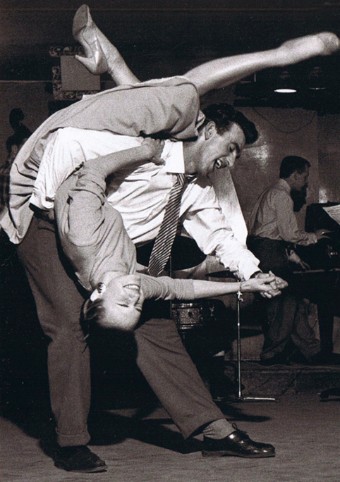
Learning how to dance
The most common mistake in the early phase of planning a research project is to first start planning what can be done – the methods in your project. A lot of things can be done, the important question is why it should be done? Planning the methods in a research project comes later. First you need to identify what kind of new knowledge you want to acquire. This is your aim or research questions. The aim and research questions is always about acquiring new knowledge that previously was not well known. You might want to make a change but that comes later when the answer to your research question are to be implemented (action research is the exception to this rule).
Sometimes I see a plan for a project describing a fantastic aim and perfect methods. However, these two does not work well together. The planned methods will answer another question than the one posed. Hence, it is not enough to have a well thought aim and good methods, these two parts must interplay well together like a dancing couple. All those evaluating your proposal for a research project (potential supervisors, funding bodies, ethics committee, etc) will focus a lot on how well aims and methods dance together.
The research process, aim and design
The first step in your process of research is to write down your aim and subsequent specifications into research questions or hypothesis. The second step is to search in the literature to see if someone else already clarified and published this. You must modify your aim and research questions if your first suggestion is already clarified and published. This is an iterative process where you gradually refine your aim and research questions until you end up with something that does not seem to be published before.
It is time to plan methods in your research project once the aim and research questions are set. The first step in planning methods is to decide the scientific approach, which of the four continents is most appropriate relative to the aim and research questions (see figure below from the page Philosophy of Science). In health care research it would almost always be one of the two top quadrants. The upper left quadrant is all about numbers and statistics while the upper right is about analyzing words or observations not using numbers or statistics. The continuation of your process depends on this choice (Assuming a background reading, aims and research questions are set):

Upper left quadrant (using statistics):
- Set the most appropriate study design.
- Decide statistical methods to draw conclusions.
- Make a sample size calculation.
- Plan data collection.
- Plan a reasonable timeline and budget.
- Describe all of the above in a study protocol.
- If relevant apply for ethics and/or funding.
Upper right quadrant (no numbers and no statistics, just words or other observations):
- Decide which empiric-holistic approach you want to use.
- Plan data collection.
- Plan a reasonable timeline and budget.
- Describe all of the above in a study protocol.
- If relevant apply for ethics and/or funding.
Det är mycket viktigt att beskriva alla detaljer i en projektplan (=forskningsplan =studieprotokoll). Det här är den detaljerade beskrivningen av ditt projekt som kommer att användas för att ansöka om etisk godkännande (om det är relevant), för att ansöka om finansiering (om det behövs), för att rekrytera medarbetare (om det behövs) och för att få stöd från andra mer erfarna personer (handledare?) som kan vara mer eller mindre involverade. Det är ytterst viktigt att det ges tillräckligt med tid att skriva ihop projektplanen. Detta kommer att få dig att tänka igenom alla detaljer så att de har en chans att faktiskt fungera i verkligheten. Ge denna process tillräckligt med tid och engagemang och du kommer sannolikt att identifiera de flesta designfel innan de dyker upp som tidskrävande och / eller dyra problem. Den tid du lägger ner när du skriver ihop projektplanen och planerar detaljerna får du sannolikt igen femfaldigt eller tiofaldigt senare under projektets livstid.
Special cases
To conduct a systematic literature review is a special case that sometimes (if a meta-analysis is performed) belongs to the upper left quadrant of the world map (see above). However, it does not directly belong to any of the four quadrants mentioned above if a meta-analysis is not conducted. A systematic literature review is a combination of a research project and evaluations / investigation (see tables above).
There are many publications that do not present their own new data and are not systematic literature reviews. These publications often discuss research findings and opinions that have already been published and may express definite opinions about them. Such publications can be interesting but are usually ignored when conducting a systematic literature review, where the focus is typically on publications presenting their own new data. This website will not further discuss publications that only express an opinion not based on original data or a systematic literature review.
Good and bad research

We all agree that “bad research” is a waste that should be avoided and we should only do “good research” , … …but who decides if a research project is good or bad? The demarcation between bad or good research is more or less well defined and furthermore, it varies over time. Criteria for good research are very different for empiric-holistic (qualitative) research projects versus empiric-atomistic (quantitative) research projects.
There are research projects where most experienced researchers would agree this is a bad project that should not be done. For other research projects most experienced researchers would agree this is a good research project that should be done. However, there are many research projects where experienced researchers would have very different opinions if this is good or bad research. This tension is the source for the continuous improvement in criteria for good research. What previously was considered good research can today be considered as bad research and vice versa. Hence, it is important to understand that the essence of research is that all rules for what constitutes good research can be challenged and this is the source of a never ending change, hopefully to the better.
Common pitfalls if you are new to research

- Starting by describing what you want to do (methods):
It is common that I see people stating they want to send out a survey or they want to do a retrospective chart review. As mentioned above the important question is why it should be done. Always define aim and research questions before planning methods. How well can you dance? - Constructing aims or research questions including an appraisal:
“Is it better to use treatment A compared to treatment B?” or “Are we doing the right thing?”. These aims include an appraisal that is more or less subjective. A scientific questions and its corresponding answer is without any subjective appraisal. The appraisal may be added as part of the discussion around your results but should never be a part of your aims, research questions or results. The proper aims or research questions should look like “Does treatment A reduce blood pressure more than treatment B?” or “Does the current diagnostic procedures add prognostic information regarding the outcome X?”. Treatment A might be more efficient in lowering blood pressure but it might also cost ten times more than treatment B. Hence, when answering the question if A is better than B you may use the answer to the research question “Does treatment A reduce blood pressure more than treatment B?” …but you would also take into consideration other factors such as costs, side effects, ability to deliver A compared to B, etc. Hence, A might lower the blood pressure more than B but your final appraisal may be that B is the preferred option. - Writing the aim as a possible consequence of the study:
It is much better to state the aim as “Is there a difference in symptoms compatible with nicotine abstinence between men and women trying to quit smoking” compared to “I want to improve the chances of women to be successful when they stop smoking”. The latter may be a consequence of the study once you have clarified if women have more symptoms indicative of nicotine abstinence. - Failing to include enough details in your written study protocol:
To satisfy funders, ethics committee, supervisors etc. carefully read the web-page about writing a study protocol providing more detailed advice and pointing out more potential pitfalls. Ensure you describe all parts in your written study protocol thoroughly.